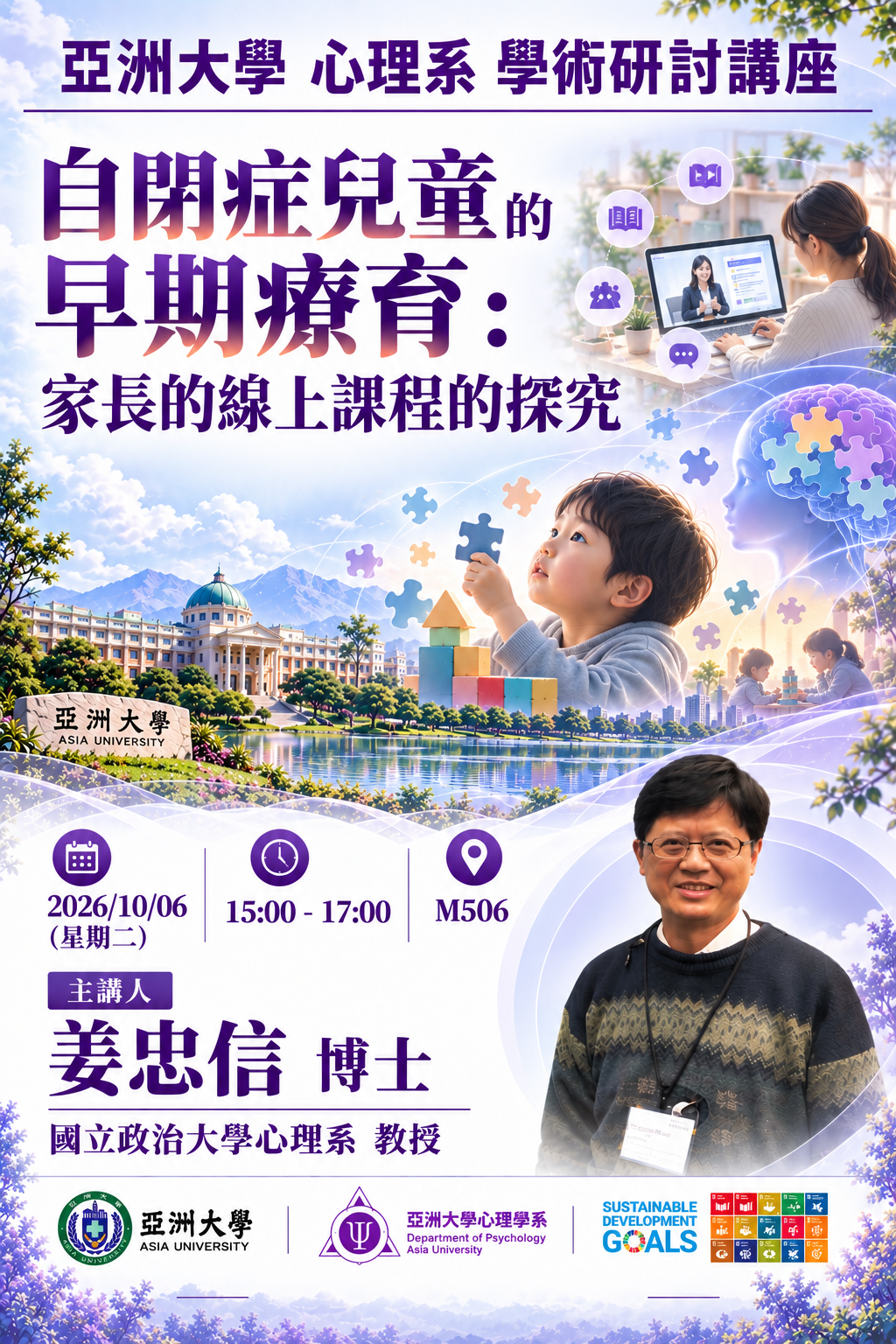

自閉症兒童的早期療育:家長的線上課程的探究
摘要
當代主流的自閉症早期療育,稱為自然且具發展性行為模式(Naturalistic Developmental Behavioral Intervention, NDBI),這個模式的特色在於第一、療育目標,要將多項發展領域,整合在療育的活動中。第二、重視療育的情境,要創造對自閉症兒童有意義的活動,重視關係及情緒酬賞價值,促進學習的類化。第三、促進發展的策略,這包括能引發高動機的活動、適切的提示原則,且融合在可預測的日常作息中。研究者過去投入學習NDBI中的JASPER、ESDM和Project ImPACT多年,發展出台灣版NDBI家長線上課程。本報告將介紹此課程的研究發現,以及未來持續探究的方向。期待此成果,能對華人世界的自閉症兒童及其家長帶來實質助益。
Title: Early Intervention for Autistic Children: An Exploration of an Online Parent-Mediated Intervention Program
Abstract
Contemporary mainstream early intervention for autistic children increasingly draws on Naturalistic Developmental Behavioral Interventions (NDBIs). NDBIs are characterized by three major features. First, intervention goals across multiple developmental domains are integrated into intervention activities rather than being addressed in isolation. Second, particular emphasis is placed on the intervention context: activities are designed to be meaningful and engaging for autistic children, with attention to the role of relationships and emotional reinforcement in promoting learning and generalization across contexts. Third, developmental strategies are incorporated to facilitate learning, including the use of highly motivating activities, developmentally appropriate prompting strategies, and intervention practices embedded within predictable daily routines.
Over the past several years, the researcher has received training in and implemented some NDBI approaches, including JASPER, the Early Start Denver Model (ESDM), and Project ImPACT. Building on this experience, a Taiwan-adapted online parent-mediated NDBI program has been developed to support parents of autistic children in learning and applying NDBI strategies in daily life routines.
This presentation will introduce the research findings concerning this online parent-mediated program, including its development, implementation, and preliminary evidence of its effectiveness. Directions for future research will also be discussed, with particular attention to how online and self-directed approaches may further enhance access to evidence-based early intervention for autistic children and their families. It is hoped that this work will contribute to the development of accessible and culturally responsive early intervention resources that can provide meaningful benefits for autistic children and their families in Taiwan and the broader Chinese-speaking community.