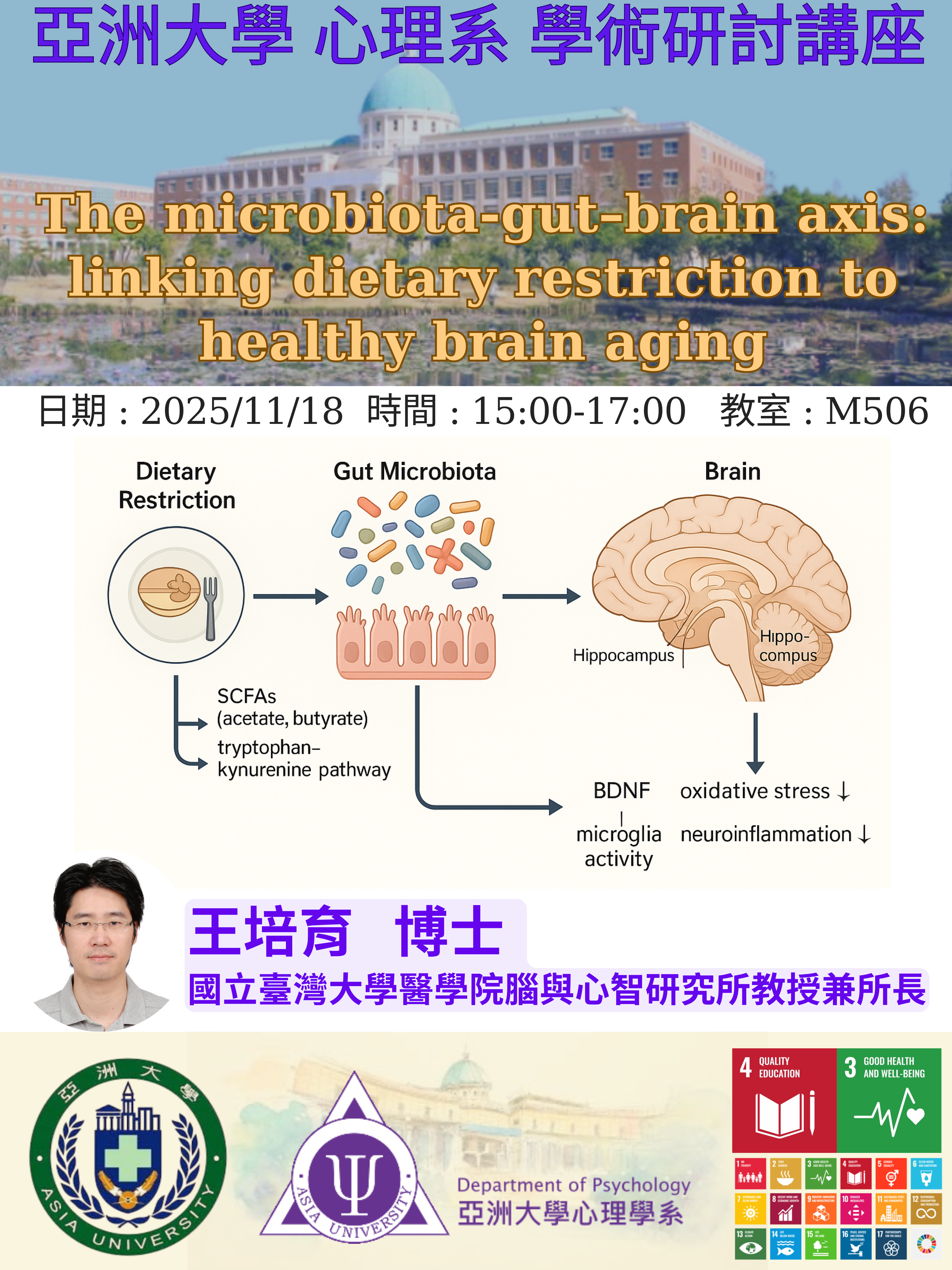
The microbiota–gut–brain axis constitutes a dynamic communication system through which dietary and microbial factors shape neural function. Emerging evidence suggests that its influence extends to the synaptic level, where microbial metabolites, such as short-chain fatty acids and tryptophan derivatives, regulate gene expression, neurotransmission, and synaptic plasticity. These metabolites enhance long-term potentiation and synaptogenesis through epigenetic and neurotrophic mechanisms, while immune and vagal signaling contribute to the regulation of microglia and synaptic remodeling. Dietary restriction, by modulating gut microbial composition, promotes the generation of neuroprotective metabolites that preserve synaptic integrity and cognitive vitality during aging. This seminar also serves as a prelude to the upcoming Nobel Laureate Panel Discussion on campus (2026 1-6). All faculty and students are warmly encouraged to participate in both intellectually inspiring events.
「腸道菌叢-腸-腦軸:連結飲食限制與健康腦老化」
演講者:臺大醫學院 腦與心智科學研究所 王培育教授/ 2025 11-18
「腸道菌叢-腸-腦軸」構成一個動態的溝通系統,透過飲食與微生物因子共同塑造神經功能。最新研究顯示,其影響可延伸至突觸層級,腸道微生物所產生的短鏈脂肪酸與色胺酸衍生物能調節基因表現、神經傳導與突觸可塑性。這些代謝物透過表觀遺傳與神經滋養機制增強長期增益作用與突觸生成,同時免疫與迷走神經訊號也參與調節小膠質細胞與突觸重塑。飲食限制藉由改變腸道菌相,促進具神經保護作用的代謝物生成,以維持突觸完整性與老化過程中的認知活力。本場研討會亦作為本校將於2026 1-6舉行的諾貝爾獎大師論壇座談會的前導活動,誠摯邀請全體師生共同參與這兩場兼具啟發性與學術深度的盛會。