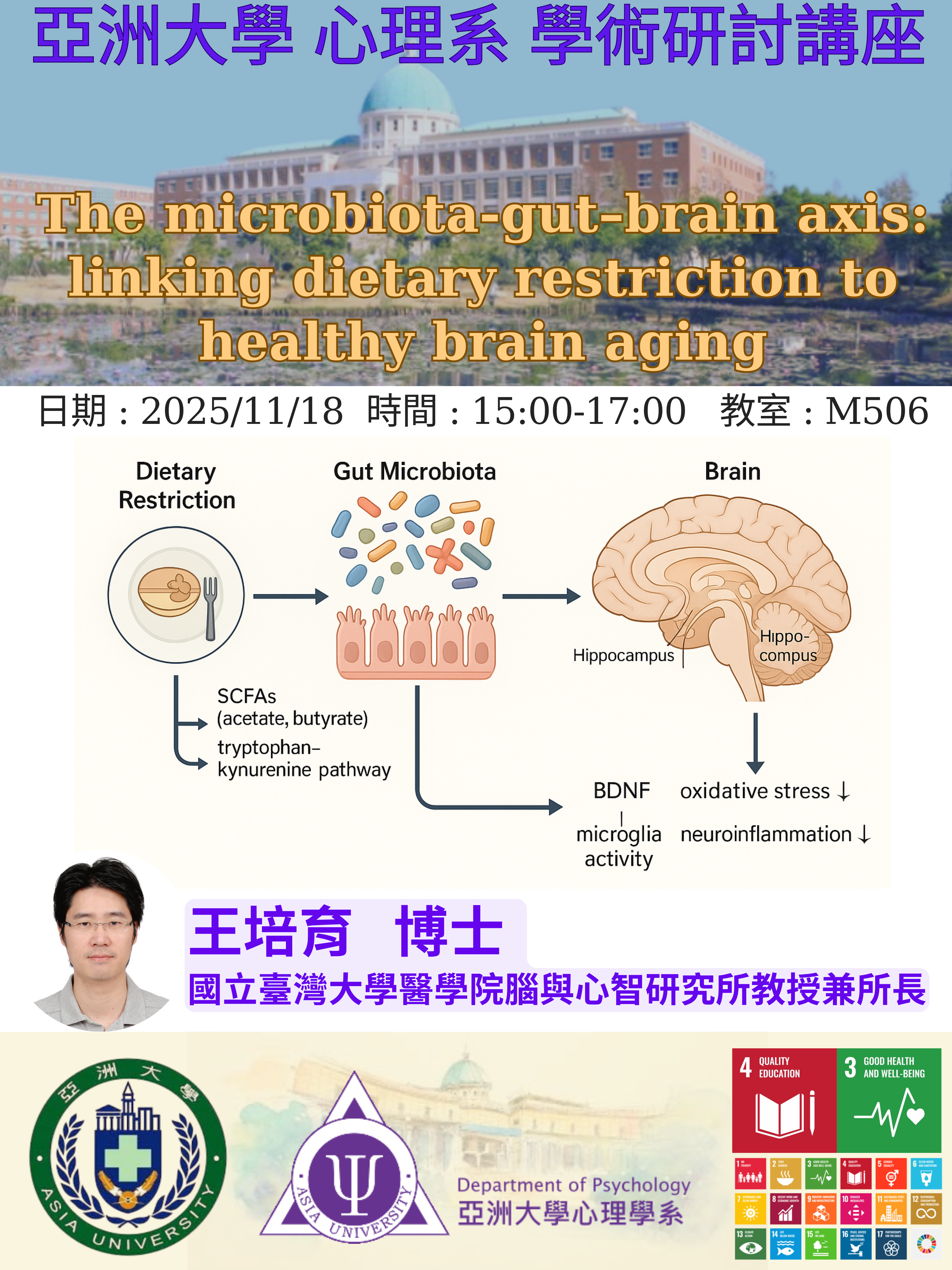
The microbiota–gut–brain axis constitutes a dynamic communication system through which dietary and microbial factors shape neural function. Emerging evidence suggests that its influence extends to the synaptic level, where microbial metabolites, such as short-chain fatty acids and tryptophan derivatives, regulate gene expression, neurotransmission, and synaptic plasticity. These metabolites enhance long-term potentiation and synaptogenesis through epigenetic and neurotrophic mechanisms, while immune and vagal signaling contribute to the regulation of microglia and synaptic remodeling. Dietary restriction, by modulating gut microbial composition, promotes the generation of neuroprotective metabolites that preserve synaptic integrity and cognitive vitality during aging. This seminar also serves as a prelude to the upcoming Nobel Laureate Panel Discussion on campus (2026 1-6). All faculty and students are warmly encouraged to participate in both intellectually inspiring events.
「肠道菌丛-肠-脑轴:连结饮食限制与健康脑老化」
演讲者:台大医学院 脑与心智科学研究所 王培育教授/ 2025 11-18
「肠道菌丛-肠-脑轴」构成一个动态的沟通系统,透过饮食与微生物因子共同塑造神经功能。最新研究显示,其影响可延伸至突触层级,肠道微生物所产生的短链脂肪酸与色胺酸衍生物能调节基因表现、神经传导与突触可塑性。这些代谢物透过表观遗传与神经滋养机制增强长期增益作用与突触生成,同时免疫与迷走神经讯号也参与调节小胶质细胞与突触重塑。饮食限制借由改变肠道菌相,促进具神经保护作用的代谢物生成,以维持突触完整性与老化过程中的认知活力。本场研讨会亦作为本校将于2026 1-6举行的诺贝尔奖大师论坛座谈会的前导活动,诚挚邀请全体师生共同参与这两场兼具启发性与学术深度的盛会。